
Choosing the right Knit Hat supplier affects more than unit cost. It shapes product quality, delivery confidence, and customer trust. A warm hat can look simple, yet its performance depends on yarn selection, stitch density, finishing, and inspection discipline. Buyers should examine how a supplier converts a design brief into a repeatable product. Ask for physical samples, not only polished catalog images. Hold the sample under direct light. Check loose threads, uneven ribs, weak seams, label placement, and color consistency. Small faults often become expensive at scale. They also reveal how carefully a factory works.
A dependable supplier should explain fiber content, sizing tolerance, knitting methods, packaging, and production capacity clearly. Relevant certifications and test reports can support these claims, but documents deserve verification. Request recent records, production photos, and references from comparable orders. Discuss minimum order quantities, sampling fees, payment terms, quality checkpoints, and realistic lead times before signing an agreement. A strong supplier welcomes measurable standards, including stitch appearance, fabric weight, shrinkage limits, and acceptable defect rates. Communication matters too. Prompt, precise replies often indicate organized production management. Still, no supplier is perfect. A sample may pass inspection and later reveal a packaging or shade issue. Build room for corrective action, reserve samples, and independent checks when the order matters. This guide explores practical questions for identifying a Knit Hat partner with consistent workmanship, transparent processes, and dependable long-term value.
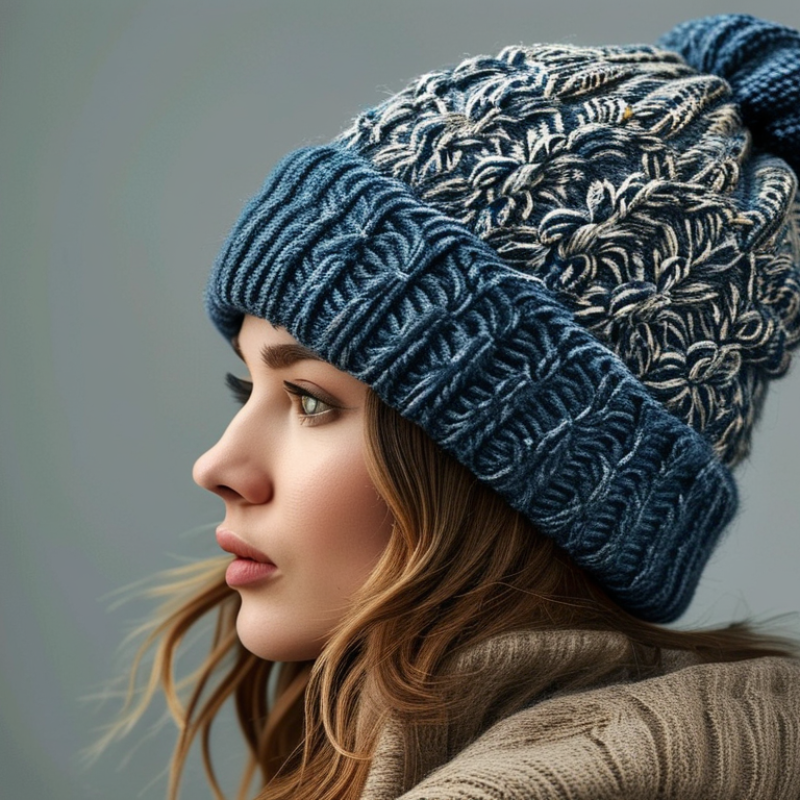
Choosing the right knit hat supplier begins with a precise specification sheet. State the fiber content in percentages, such as 60% cotton and 40% acrylic. Include yarn type, finishing method, and any lining details. A supplier should confirm whether the stated composition applies before or after finishing. That distinction can affect testing results and product feel.
Gauge describes the number of needles used in a knitted structure. A finer gauge usually creates a smoother, lighter hat, while a coarser gauge can feel warmer and more textured. Do not treat gauge as GSM. GSM measures fabric weight in grams per square meter. Request both values, then compare them against an approved sample. Measure twice. Small details matter.
Size tolerance must cover crown height, opening width, cuff height, and pom-pom placement when applicable. For example, a fitted opening might allow ±0.5 cm, while crown height may need ±1 cm. Set tolerances according to wear tests, not guesswork. I have seen neat specification sheets hide loose cuffs and uneven seams. My earlier measurements sometimes missed stretch recovery, too. Ask the supplier to measure relaxed and stretched dimensions, using the same method for every sample and production batch. Photograph the measuring process for clearer quality records.
Typical GSM ranges for knit hats by intended use
Fiber content: Acrylic is commonly selected for color consistency, durability, and cost efficiency. Wool and wool blends generally provide higher warmth and moisture management, while recycled polyester can improve sustainability and abrasion resistance.
Gauge: A lower gauge creates thicker, heavier stitches, while a higher gauge creates a finer and lighter knit. Common hat constructions range from approximately 5 gauge for chunky knits to 12 gauge for fine-gauge styles.
GSM: Grams per square metre indicates fabric weight. Lightweight hats are typically around 80–120 GSM, midweight hats around 120–180 GSM, and heavy winter hats around 180–250 GSM.
Size tolerance: A practical production target is usually around ±1 cm for head circumference and height, subject to the knit structure, fiber elasticity, finishing process, and measurement method.
Choosing the right knit hat supplier starts with capacity, not attractive photos. Ask for the minimum order quantity, monthly output, and realistic lead time. These figures show whether the factory fits your launch size and sales plan.
A low MOQ can help with a trial order, but it may indicate limited production efficiency. Ask whether the MOQ changes by color, yarn type, or custom label.
A supplier producing 80,000 hats monthly may still struggle with a sudden 20,000-piece order. Request recent production records, shift details, and quality inspection steps.
Numbers need context.
A 30–45-day lead time sounds practical for many knit hat projects. Confirm when that period begins.
Is it after payment, sample approval, or yarn arrival?
Include knitting, linking, embroidery, inspection, and packing in the schedule.
I once treated production time as the full delivery time. That was a costly mistake. Freight and port delays were not included.
Ask for a capacity plan with weekly milestones. For example, 5,000 hats in week one should become measurable progress, not a vague promise. Check whether the same team handles several orders simultaneously.
During peak seasons, monthly output can drop sharply. A supplier may promise speed, yet lack backup equipment or trained operators.
That risk deserves a direct conversation before signing.
Small test orders reveal more than polished presentations.
Choosing the right knit hat supplier starts with its quality system, not its product photos. I review the supplier’s ISO 9001 certificate, certification scope, and expiry date. The certificate should cover manufacturing activities relevant to knitted accessories. A certificate alone proves little. I also check whether workers follow documented procedures for yarn receiving, knitting, trimming, labeling, and packing.
During a factory audit, I ask for inspection records from recent production. Useful records show measurements, color checks, seam strength, and defect handling. Traceability matters. Each batch should connect to yarn lots, production dates, operators, and final inspection results. I once focused too heavily on attractive samples and missed inconsistent sizing in bulk goods. That mistake changed my audit checklist.
AQL 2.5 inspections add an independent quality checkpoint. The inspector selects cartons and units according to an agreed sampling plan. Defects are classified as critical, major, or minor. AQL 2.5 is not a promise of zero defects. It is a statistical acceptance standard, so buyers must define defect categories clearly. For knit hats, check loose threads, holes, uneven ribbing, incorrect labels, stains, and measurements. Ask for dated photographs and a complete inspection report. If results fail, require corrective action and reinspection before shipment. Sampling has limits, too. A supplier with strong records may still need closer monitoring during its first production runs.
| Audit Dimension | What to Verify | Objective Benchmark | Required Evidence | Assessment |
|---|---|---|---|---|
| Quality Management System | Confirm that the supplier operates a documented quality management system covering design, purchasing, production, inspection, nonconformity control and corrective action. | Documented and implemented process controls | Quality manual or process map, internal audit records, corrective-action reports and management-review records | Pass / Fail |
| ISO 9001 Certification | Check whether the certificate is issued by an accredited certification body and remains valid for the actual manufacturing site. | Valid ISO 9001 certificate with matching site and scope | Certificate number, issue date, expiry date, certification-body details, site address and scope of certification | Verified / Not Verified |
| Certificate Scope | Ensure the certified scope includes activities relevant to knit hats, such as knitted-product manufacturing, finishing, inspection or packing. | Scope matches the ordered product and production site | Certificate scope statement and confirmation that subcontracted processes are controlled | Match / Mismatch |
| Incoming Material Control | Review controls for yarn, labels, tags, packaging materials and any decorative components before production begins. | Approved specifications and recorded incoming inspections | Material specifications, supplier records, inspection reports, lot identification and quarantine procedure | Controlled / Uncontrolled |
| In-Process Inspection | Confirm that measurements and workmanship are checked during knitting, linking, sewing, finishing and packing. | Defined checkpoints with traceable inspection records | Inspection checklist, measurement records, defect classification and operator training records | Pass / Fail |
| Final Inspection Standard | Use an agreed written specification for dimensions, appearance, color, labeling, packaging and workmanship. | Buyer-approved golden sample and measurable tolerances | Technical pack, approved sample, tolerance chart, packing instructions and inspection report | Complete / Incomplete |
| AQL Sampling Plan | Confirm that the supplier uses a documented acceptance-sampling plan based on ISO 2859-1 or an equivalent agreed standard. | Normal inspection, single sampling, General Inspection Level II | Sampling plan, lot definition, inspection level, sample-size code and inspection records | Compliant / Non-Compliant |
| AQL 2.5 Example | For a lot size of 1,201–3,200 units under General Inspection Level II, verify that the correct sample size and acceptance numbers are applied. | Sample size: 125 units; AQL 2.5: Ac 7 / Re 8 | Inspection report showing lot size, sample size, defect count and final disposition | Accept if ≤ 7 Reject if ≥ 8 |
| Defect Classification | Check that critical, major and minor defects are defined separately and linked to agreed acceptance limits. | Critical defects: zero tolerance unless otherwise agreed | Defect catalogue covering holes, open seams, severe contamination, incorrect labeling, measurement failures and appearance issues | Defined / Undefined |
| Measurement Accuracy | Verify head circumference, height, cuff dimensions and other agreed measurements against the approved specification. | All measurements within buyer-approved tolerances | Calibrated measuring tools, measurement procedure and completed measurement sheets | Within / Outside Tolerance |
| Corrective Action System | Assess how the supplier investigates recurring defects and prevents them from appearing in subsequent lots. | Root-cause analysis with verified preventive action | Nonconformity report, root-cause analysis, action owner, deadline and effectiveness review | Effective / Ineffective |
| Traceability and Records | Confirm that finished goods can be traced to production dates, material lots, inspection results and shipment records. | Lot-level traceability maintained throughout production | Batch records, material lot numbers, production logs, inspection reports and shipment documents | Traceable / Not Traceable |
| Supplier Selection Score | Use the audit results to compare suppliers consistently before approving production. | Recommended minimum: 80 out of 100 points | Completed audit checklist with weighted scores and documented corrective actions for any failed item | Approved / Conditional / Rejected |
Choosing the right knit hat supplier starts with evidence, not polished samples. Ask for current CPSIA test reports when selling in the United States. These reports should cover lead, phthalates, dyes, and other applicable material risks. For European sales, request REACH-related documentation for yarns, buttons, labels, and packaging. Also check OEKO-TEX certification details, including the certified product, facility, and validity period. A certificate without clear scope proves little. Compare the report’s fiber composition with the actual hat. Even small changes in yarn or dye can affect compliance.
Social-audit records reveal how responsibly a supplier operates beyond product testing. Request the audit date, audit standard, factory address, worker count, and corrective-action history. Look for evidence involving wages, working hours, fire safety, dormitories, and worker interviews. Recent records matter more than an old passing grade. Ask whether unresolved issues were verified after correction.
Visit the facility when possible, or arrange a live video inspection of knitting areas, storage rooms, and emergency exits. Keep written answers, test reports, and audit files together. Suppliers who explain gaps honestly may be more reliable than those offering perfect documents.
Choosing the right knit hat supplier requires more than comparing FOB prices. A low quote can hide important costs. FOB pricing usually covers production and delivery to the agreed export port. It may exclude ocean freight, insurance, destination charges, and import duties. Ask for the exact FOB port, currency, minimum order quantity, and payment terms. Do not compare incomplete quotes. A quote without clear assumptions is fragile.
Sampling fees also affect the real budget. Suppliers may charge for yarn, development, labor, and courier delivery. Ask whether the fee is refundable or credited against a bulk order. For custom colors, logos, or rib patterns, request a written sample timeline. Keep the approved sample and specification sheet together. Small differences in stretch or color can create expensive rework. I have found that buyers often focus on the sample price and overlook revision costs.
Duties depend on the product classification, material composition, origin, and destination country. Use a qualified customs professional to check the likely rate before ordering. Packaging needs similar attention. Individual polybags, recycled paper bands, carton labels, and protective inserts all change the landed cost. Request carton dimensions, gross weight, packing quantity, and pallet details. A cheaper hat may require larger cartons. That can increase freight charges. Leave room for currency changes, inspection costs, and unexpected destination fees. Some estimates will still be imperfect. That is worth acknowledging before signing.
State fiber percentages, yarn type, finishing method, lining details, and finished measurements. Clarify whether fiber content applies before or after finishing. Small wording differences matter.
Gauge describes the needle density in the knitted structure. GSM measures fabric weight in grams per square meter. Request both values and compare them with an approved sample.
Include crown height, opening width, cuff height, and pom-pom placement when applicable. A fitted opening might allow ±0.5 centimeter. Crown height may allow ±1 centimeter.
Yes, request both measurements when stretch affects fit. Use the same method for every sample and production batch. I once missed stretch recovery.
Compare more than the quoted FOB price. Confirm the export port, currency, minimum order, and payment terms. Freight, insurance, duties, and destination charges may be separate.
Ask whether fees include yarn, development, labor, and courier delivery. Confirm whether the fee is refundable or credited toward bulk production. Revision costs can quietly grow.
Check classification, material composition, origin, and destination country. A qualified customs professional can estimate the likely rate. Treat estimates as provisional.
Confirm bag type, paper bands, carton labels, inserts, carton size, and gross weight. Request packing quantity and pallet details. Larger cartons may increase freight charges.
Choosing the right Knit Hat supplier begins with clearly defining your product requirements, including fiber content, knitting gauge, GSM, measurements, and acceptable size tolerance. These details help suppliers provide accurate quotations and consistent samples. You should also compare their MOQ, monthly production capacity, and ability to meet a 30–45-day lead time. Before placing an order, review their quality management procedures, ISO 9001 certification, inspection records, and AQL 2.5 standards to confirm reliable production control.
Compliance and total cost are equally important. Request documentation related to CPSIA, REACH, textile safety certifications, and social-audit records to ensure responsible and legally compliant manufacturing. When comparing offers, consider more than FOB pricing: include sampling fees, import duties, packaging, labeling, and possible inspection costs. A supplier that combines stable quality, transparent communication, verified compliance, and realistic production capacity can help reduce risks and deliver Knit Hat products that meet both business and customer expectations.
