Choosing dependable Snapback Hats suppliers requires more than comparing catalog prices. Global buyers must examine construction, material consistency, production capacity, communication, and delivery performance. A supplier may display attractive photographs, yet the final cap can reveal uneven embroidery, weak plastic closures, or a stiff brim. Small details matter.
Headwear sourcing consultant Lisa McKnight says, “A reliable hat supplier proves quality through samples, documentation, and repeatable production.” This principle shapes our selection. The suppliers covered in this guide were considered through practical criteria, including minimum order quantities, fabric options, panel structure, embroidery accuracy, private-label support, packaging, and export experience. Their ability to serve different markets also matters. A streetwear brand may need flexible small batches, while a distributor may require thousands of matching units.
No ranking is perfect. Supplier capabilities can change with factory schedules, material costs, and freight conditions. Sample quality may also exceed bulk production quality if inspection is weak. That risk deserves attention. Buyers should request pre-production samples, confirm measurement charts, and clarify defect policies before placing large orders. It is also wise to verify certifications and manufacturing claims directly.
This guide presents ten Snapback Hats suppliers for global buyers seeking practical, scalable options. Some may excel in customization. Others may compete through speed, pricing, or specialized fabrics. The best choice depends on your market, budget, timeline, and quality expectations. Look beyond polished websites. Ask specific questions. Request evidence. Then compare suppliers with a clear purchasing checklist.
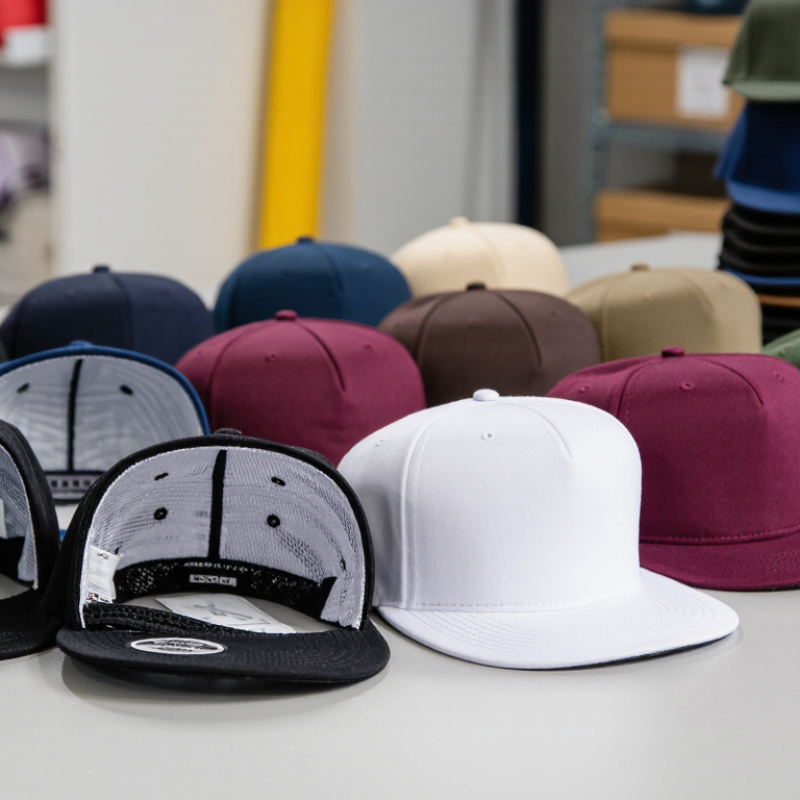
For global buyers, a reliable snapback hat supplier proves consistency before requesting a large order. Good suppliers share factory details, material specifications, and recent production photos. They explain crown fabrics, visor structure, closure quality, and embroidery limits clearly. Experience matters when designs include curved logos, unusual panels, or multiple colorways. Request physical samples. A polished sample can still hide weak stitching.
Check whether the supplier uses documented inspections during fabric receiving, sewing, decoration, and packing. Ask for measurements, color references, tolerance ranges, and carton details. A dependable partner answers clearly about minimum order quantities, lead times, payment stages, and replacement procedures. They should provide product records suitable for your market’s labeling and safety expectations. Do not trust impressive promises alone. Verify them through sample approval and a small trial order.
My own caution: the cheapest quote often creates expensive delays. Yet high prices do not guarantee control.
Tips:
When evaluating the top 10 snapback hat suppliers, look beyond product photos and quoted prices. A strong supplier should provide clear material details, size charts, customization limits, and realistic production timelines. Ask whether the crown keeps its shape after repeated handling. Check the snap closure, stitching density, sweatband, and embroidery edges on physical samples. Small details matter.
A practical supplier comparison should include minimum order quantity, sample fees, payment terms, packaging options, and shipping records. Request recent quality-control photos, not only polished catalog images. Confirm whether the factory can support your target volume during busy seasons. Communication also deserves a score. Slow replies before an order often signal larger problems later. Price is only one factor.
Reliable suppliers explain their quality process and provide appropriate documentation for materials, labeling, and workplace standards. Verify certificates with the issuing organization when possible. Do not accept vague claims. I have seen attractive samples hide uneven panels and weak stitching in bulk production. That mistake is expensive. A second pre-production sample can reduce the risk, although it adds time and cost. Leave room for that delay in your buying plan. Supplier rankings should reflect evidence, not promises.
Comparative supplier-evaluation table based on commonly used international sourcing criteria
| Rank | Anonymous Supplier Profile | Typical MOQ (units) |
Sample Lead Time (days) |
Bulk Lead Time (days) |
Customization | Material Options | Quality Control | Export Readiness | Overall Score (5.0) |
|---|---|---|---|---|---|---|---|---|---|
| 1 | Profile A — High-volume OEM manufacturer | 500 | 7–10 | 25–35 | Excellent | Cotton, polyester, recycled fabrics | Pre-production and final inspection | Strong | 4.8 |
| 2 | Profile B — Custom embroidery specialist | 300 | 8–12 | 28–40 | Excellent | Twill, mesh, wool blends | Embroidery and dimensional checks | Strong | 4.7 |
| 3 | Profile C — Sustainable-material supplier | 500 | 10–14 | 30–45 | Very good | Organic cotton, recycled polyester | Material documentation and batch testing | Strong | 4.6 |
| 4 | Profile D — Fast-turn private-label producer | 300 | 5–8 | 20–30 | Very good | Cotton, polyester, nylon mesh | Inline and final inspection | Strong | 4.5 |
| 5 | Profile E — Promotional merchandise specialist | 1,000 | 7–12 | 25–40 | Good | Cotton, polyester, foam-front | Standard final inspection | Very strong | 4.4 |
| 6 | Profile F — Small-batch fashion manufacturer | 100 | 10–15 | 30–45 | Excellent | Cotton, corduroy, wool blends | Manual workmanship inspection | Good | 4.3 |
| 7 | Profile G — Mesh and performance-hat specialist | 500 | 8–12 | 28–42 | Very good | Nylon mesh, polyester, stretch fabrics | Fit, colorfastness, and seam checks | Good | 4.2 |
| 8 | Profile H — Cost-focused wholesale supplier | 1,000 | 7–10 | 25–35 | Good | Polyester, cotton blends | Basic final inspection | Very strong | 4.1 |
| 9 | Profile I — Regional contract manufacturer | 500 | 10–14 | 30–45 | Good | Cotton, polyester, blended fabrics | Documented pre-shipment checks | Good | 4.0 |
| 10 | Profile J — Starter-order supplier | 50 | 10–16 | 35–50 | Good | Cotton, polyester | Basic production inspection | Moderate | 3.9 |
For global buyers, a useful snapback supplier profile should show more than a catalog. Product range matters. Reliable manufacturers usually offer flat-brim, curved-brim, five-panel, mesh-back, and youth styles.
US$26 billion Grand View Research estimated the global headwear market at approximately US$26 billion in 2023, with continued growth through 2030. This suggests demand, but not automatic supplier quality.
Customization separates capable factories from simple traders. Ask whether they can adjust crown height, brim curvature, closure hardware, embroidery density, woven labels, and packaging. A practical sample should show thread tension, stitch alignment, color accuracy, and sweatband comfort. Recycled polyester and organic cotton options are increasingly relevant, while material claims still require verification.
I have seen attractive samples fail during bulk production. Small details become expensive mistakes.
Production capacity needs measurable evidence. Profiles should state monthly output, minimum order quantities, sampling time, bulk lead time, and inspection procedures. A factory producing 50,000 pieces monthly may suit a seasonal campaign, but capacity can change during peak months.
The International Trade Centre highlights traceability and supplier transparency as important factors in responsible sourcing. Buyers should request recent audit records, production photographs, and shipment references. Self-reported numbers are useful, not conclusive. A stronger evaluation compares promised capacity with actual delivery records, defect rates, and communication speed.
Top 10 Snapback Hats Suppliers for Global Buyers?
Comparing Pricing, Quality Standards, and International Shipping
When comparing ten snapback hat suppliers, unit price should not lead the decision. A low quote may exclude embroidery, custom labels, packaging, or inspection fees. Request one identical sample from every shortlisted supplier. Samples matter. Check crown shape, brim alignment, fabric weight, closure strength, and stitching density. I also measure the finished size, because small differences can affect retail returns.
Quality becomes clearer through documented procedures. Ask whether the supplier uses incoming fabric checks, colorfastness testing, and final random inspections. Request photos of packed cartons, not only showroom images. A reliable supplier should explain defect handling and replacement terms in writing. However, certificates alone are imperfect evidence. An attractive audit report cannot replace a physical sample and production inspection.
International shipping needs equal attention. Compare prices using the same trade term, carton quantity, destination port, and delivery method. Air freight may suit urgent launches, while sea freight usually lowers costs for larger orders. Confirm carton dimensions, gross weight, export documents, tracking responsibility, and estimated customs processing time. Ask for a landed-cost estimate, including freight and local charges. That figure often changes the ranking. Delivery estimates can also be optimistic, especially before holiday production peaks. Ask again, and leave buffer days.
Comparison of indicative wholesale pricing, minimum order quantity, production lead time, and international shipping readiness. Supplier identities are anonymized for neutral benchmarking.
Lower pricing, MOQ, and lead-time values are generally more favorable, while a higher shipping-readiness score indicates stronger export documentation, packaging consistency, and international fulfillment capability. Figures are indicative B2B market benchmarks and should be confirmed through supplier quotations.
Choosing the best snapback hat supplier requires more than comparing catalog photos. A strong supplier should match your market’s style, price range, and delivery expectations. Check the crown shape, brim construction, closure strength, and fabric weight through physical samples. Details matter.
Ask for proof of production capacity, quality procedures, and material traceability. Reliable suppliers can explain their minimum order quantity, sampling fees, lead times, packaging options, and replacement policy. Request recent inspection records when available. Do not accept vague promises. A polished sample may hide weak stitching or uneven embroidery. Test the snap closure repeatedly, inspect the sweatband, and compare colors under natural light. Small defects become expensive when ordering thousands of units.
Your target market also affects the decision. Lightweight mesh may suit hot regions, while structured cotton or wool-blend caps may fit cooler retail seasons. Confirm sizing and labeling requirements before production. Suppliers should provide clear documentation for materials, safe manufacturing, and lawful international trade. Ask how they handle factory changes and delayed shipments. These answers reveal operational maturity.
Price still matters, but the lowest quote often excludes inspection, stronger packaging, or realistic freight costs. Build a comparison sheet with landed cost, defect tolerance, payment terms, and delivery history. In practice, buyers sometimes overvalue a low sample price. That mistake is easy to repeat. A short trial order can expose weaknesses before a larger commitment.
Request factory details, material specifications, and recent production photos. Ask for physical samples before placing a large order. Samples matter. A polished sample may still hide weak stitching, so inspect it closely.
Check crown shape, visor alignment, fabric weight, closure strength, and stitching density. Measure the finished size with a ruler. Test the snap closure repeatedly. Small differences can increase retail returns.
Ask about inspections during fabric receiving, sewing, decoration, and packing. Request color references, measurement tolerances, and carton details. Photos of packed cartons can reveal more than showroom images. Certificates help, but they are not perfect proof.
Use one specification sheet for every supplier. Include embroidery, labels, packaging, inspection, and shipping charges. A low quote may exclude important services. High prices do not guarantee better control either.
Compare the same trade term, carton quantity, destination port, and delivery method. Confirm carton dimensions, gross weight, export documents, and tracking responsibility. Air freight suits urgent launches. Sea freight often reduces costs for larger orders.
Request freight, local charges, and estimated customs-processing costs in writing. Use the destination port and carton information from the actual order. The final figure may change the supplier ranking. Leave buffer days.
Ask about curved logos, unusual panels, color combinations, and embroidery limits. Confirm every measurement and color reference before production. Record changes in writing. Memory is not a control system.
Compare at least three suppliers using identical requirements. Keep one approved sample for future inspections. Place a small trial order before scaling up. The cheapest option may create expensive delays.
Finding the right Snapback Hats supplier is essential for global buyers seeking consistent quality, competitive pricing, and dependable delivery. A reliable supplier should offer a broad product range, flexible customization options, clear communication, stable production capacity, and transparent quality-control procedures. Buyers should evaluate material selection, stitching, panel structure, closure durability, logo application, sample approval, minimum order quantities, and the supplier’s ability to meet deadlines.
This guide explains how to compare leading suppliers according to product variety, customization capabilities, manufacturing scale, pricing, quality standards, packaging, and international shipping support. It also highlights the importance of reviewing production samples, confirming compliance documentation, understanding payment terms, and assessing after-sales service. By matching a supplier’s strengths with the target market, sales channel, budget, and order volume, buyers can make a practical decision and build a reliable long-term sourcing relationship.