 Chenyou Hats Chenyou Hats

The global winter headwear market for infants, toddlers, and children is projected to expand at a compound annual growth rate (CAGR) of 6.4% through 2030, hitting an estimated global value exceeding $6.8 Billion USD. Growth is driven by urban outdoor mobility, winter sports participation, and heightened parental investment in premium thermal protection.
Unlike adult apparel, children's winter headwear requires strict compliance with international standards including CPSIA (US), REACH Regulation (EU), OEKO-TEX Standard 100 (Class 1), and GB 31701-2015 (China Safety Code for Infants and Children). Key parameters demand zero lead/phthalates, non-choking drawstrings, and hypoallergenic internal linings.
Global brands are consolidating supplier networks, shifting away from fragmented small workshops toward integrated industrial ecosystems capable of supporting automated circular knitting, 3D digital sample rendering, ultra-low lead times, and comprehensive physical thermal lab validations under one roof.
Situated in Ligezhuang Town, Qingdao — globally recognized as China's primary hub for headwear manufacturing — Qingdao Chenyou Hat Industry Co., Ltd. leverages a complete local supply chain ecosystem. Within a 10-kilometer radius, our facility accesses specialized dye houses, custom yarn spinners, precision embroidery software developers, and metal hardware mold makers.
This geographic concentration reduces raw material procurement turnaround by 40% compared to non-clustered factories, protecting international clients against supply chain delays and sudden market fluctuations.
Founded by Emma Wang in 2008 following extensive technical immersion in high-precision Japanese apparel manufacturing, our facility operates 5 specialized sewing and knitting lines powered by over 100 skilled technicians. Key operational advantages include:
Every batch of kids' winter hats undergoes a strict 4-stage internal quality control gate prior to export container loading:
Yarn tensile testing, colorfastness washing test (Grade 4+ standard), zero-formaldehyde textile screening.
Continuous verification of stitches per inch (SPI 8-10), seam tensile strength, and pom-pom pull-test (>70N force resilience).
100% automated needle detector passage for infant and children headwear batches to prevent micro-metal hazards.
We utilize certified Azo-Free Cashmere-Touch Acrylic, GOTS-certified Organic Cotton, and Australian Fine Merino Wool blends. These fibers offer superior loft and warmth retention without triggering sensitive infant skin conditions such as eczema or contact dermatitis.
Integrating high-density anti-pilling micro-fleece linings (200–280 GSM) creates a windproof barrier while allowing perspiration vapor to escape. This dual-action thermal regulation keeps children dry and warm down to ambient temperatures of -20°C.
Children's head circumferences change rapidly. Our production lines use 3D ergonomic growth models covering: Infants (44–48 cm), Toddlers (48–52 cm), and Youth/Kids (52–56 cm), incorporating high-elasticity rib knits that expand comfortably without applying cranial pressure.
Regional Focus: North America (US/Canada), Northern Europe (Scandinavia), Alpine Regions.
Technical Requirements: Integrated earflaps (Peruvian Chullo design), windproof hydrophobic outer shells, reflective safety yarn stitching, and chin-strap hook-and-loop closures to maintain stability during active movement.
Regional Focus: United Kingdom, Japan, South Korea, Urban US Outlets.
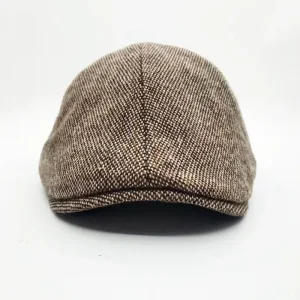
Technical Requirements: Chunky cable knits, detachable faux-fur or yarn pom-poms, custom 3D silicone patches, jacquard woven logos, and vintage tweed wool newsboy caps for high-end boutique retail collections.
Ideal for established fashion brands and licensors possessing complete tech packs, vector artwork, and strict physical bill-of-materials (BOM) specifications.
Ideal for growing private labels, boutique buyers, and e-commerce brands seeking ready-to-market designs tailored to current seasonal trends.
Environmental regulations and consumer expectations are accelerating adoption of GRS-certified (Global Recycled Standard) polyester made from post-consumer plastic bottles. These fibers match virgin acrylic in thermal loft and softness while lowering carbon footprint by up to 45%.
Transitioning from cut-and-sew methods to advanced computerized 3D knitting technology eliminates internal seams altogether, reducing raw material waste by 30% while creating frictionless comfort for infants and young children.
Integrating non-toxic silver ion or plant-based antimicrobial yarn treatments prevents bacterial accumulation caused by active sweating, keeping winter beanies fresh through extended outdoor play cycles.