Directly manufactured on our high-speed multi-gauge lines. Calibrated for seamless export to Salto distribution depots, regional Mercosur channels, and international private labels.
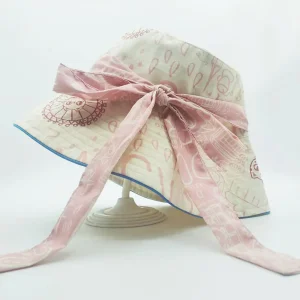
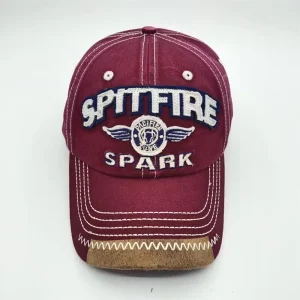
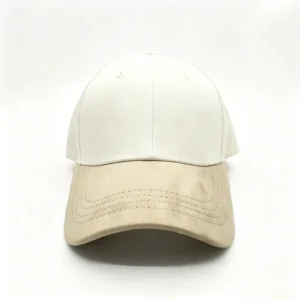
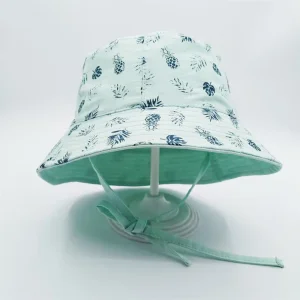
The city of Salto occupies a critically vital strategic locus within South America's Río Uruguay multimodal logistics network. Long respected as a regional trading nexus connecting agro-industrial enterprises, thermal commerce hubs, and cross-border transport corridors with Concordia and the wider Mercosur territory, Salto has witnessed a profound transformation in how technical apparel, workwear accessories, and cold-weather knitwear are sourced, warehoused, and distributed.
While historically dependent on fragmented local sewing workshops and third-party import agents, commercial procurement officers across Salto, Montevideo, and regional distribution networks now demand direct factory-floor partnerships. Rising consumer sophistication in corporate workwear, agricultural safety gear, retail sports merchandise, and winter outdoor leisure has created an urgent mandate for precision beanies that withstand industrial wash cycles, retain structural elasticity, and meet stringent international fiber purity metrics.
By establishing direct bilateral production conduits from our specialized manufacturing base to Salto's freight consolidation facilities, enterprise buyers completely bypass conventional broker markups. This ensures direct engineering oversight, real-time stitch-density control, and predictable tariff classification under Mercosur import frameworks.
Knitwear is transitioning rapidly from commodity cold-weather basics into high-performance, ergonomically mapped, and circularly compliant headwear.
Traditional cut-and-sew knit beanies generate upwards of 18% cut-edge yarn scrap. Next-generation Shima Seiki WHOLEGARMENT® and computerized flatbed knitting create continuous three-dimensional crowns without bulky dart seams, drastically reducing material waste while maximizing crown shape memory.
Modern enterprise workwear and technical lifestyle beanies integrate dual-layer composite yarn spinning. Blending hydrophobic hollow-core polyester on the interior with anti-pilling modified acrylic or Merino wool on the exterior ensures instantaneous sweat expulsion alongside thermal barrier retention.
Global regulatory pressure mandates verified feedstock provenance. Commercial brands now specify Global Recycled Standard (GRS) verified post-consumer RPET twill and acrylic blends, OEKO-TEX Standard 100 Class II chemical safety, and non-mulesed wool certifications for corporate compliance audits.
How tier-1 contract manufacturing solves the fundamental bottlenecks of margin compression, dimensional instability, and color deviation.
| Procurement Friction Point | Conventional Market Defect | Factory-Direct Engineering Protocol | Impact on Salto & Global Buyers |
|---|---|---|---|
| Dimensional Shrinkage & Crown Distortion | Uncalibrated yarn steaming causes up to 8% post-wash shrinkage and torque twist along the ribbed cuff seam. | Continuous tension yarn feeding followed by high-pressure steam frame blocking; shrinkage locked to <2.0% under ISO 6330. | Zero consumer returns; consistent sizing retention across multi-season corporate distribution programs. |
| Pilling & Fiber Fuzzing (Surface Wear) | Short-staple open-end spun yarns fuzz rapidly under abrasion, failing after 1,000 Martindale rub cycles. | Long-staple vortex-spun combed acrylic and ring-spun composite wool yielding Martindale Grade 4.5+ pill resistance. | Extended garment service lifespan for agricultural, outdoor construction, and tactical deployments. |
| Embossed Patch & Embroidery Puckering | Heavy direct embroidery on flexible knit ribs causes severe puckering, wave deformities, and stitch pull-through. | High-density laser-cut micro-injected silicone, ultrasonic bonded leather crests, and reinforced heat-seal backings. | Ultra-clean logo definition with zero mechanical fabric tension distortion across the forehead crest. |
| MOQ Inflexibility & Long Lead Volatility | Trading middlemen impose rigid 2,000+ pcs minimums per colorway with opaque 90-day production schedules. | Agile multi-line production with MOQ from 100 pcs per style; 7-day physical prototyping and 20-day batch runs. | Optimized working capital, reduced warehouse holding risk, and rapid replenishment cycles. |
True manufacturing authority requires absolute floor-level control over every thermodynamic and mechanical stage of beanie fabrication. Our facility operates an unbroken technical loop from raw cone yarn inspection to boxed container dispatch.
1. Programmable Multi-Gauge Knitting: Our machine fleet spans 3-gauge (heavy cable and chunk knit silhouettes), 7-gauge (classic military fisherman rib), 10-gauge (fine-rib technical workwear), and 12-to-14 gauge (ultra-fine performance double-layer beanies). Real-time digital yarn feeding transducers eliminate torque variations between batch dyeing lots.
2. Precision Linking vs. Overlock Seaming: Low-cost factories utilize crude overlock chain stitching to assemble beanie crowns, creating bulky, irritating interior ridges that cause forehead pressure marks. We utilize continuous circular needle-by-needle linking machines, producing flat, micro-gauge seams that flex elastically with the natural contour of the skull.
3. Advanced Steam Stabilization: After assembly, every beanie undergoes automated dimensional steam blocking on custom aluminum head forms, relaxing internal yarn mechanical stresses and locking final perimeter dimensions permanently into place.
A beanie is more than a thermal layer—it is the flagship branding asset for lifestyle fashion, athletic clubs, and corporate entities. We offer engineered customization options that withstand weathering, perspiration, and mechanical stretch:
Zero compliance compromises. Every shipment destined for Salto, North America, or Europe is backed by international laboratory verifications and verifiable social accountability audits.
Our manufacturing workshops are audited regularly under BSCI and Sedex/SMETA protocols. We enforce strict fair-wage employment, clean working environments, fire-safety compliance, and zero juvenile labor across our entire tiered production floor.
All knitting yarns, dye agents, and trim accessories conform to OEKO-TEX Standard 100 Class II and EU REACH regulations. We provide certified laboratory test results confirming undetectable levels of formaldehyde, heavy metals, arylamines, and banned azo dyes.
Navigating customs tariffs across South American ports demands accurate paperwork. We supply full Commercial Invoices, Packing Lists with volumetric metrics, Certificates of Origin, and Harmonized System (HS) code 6505.00 classification documentation to expedite swift entry.
Anticipating the technological convergence of computational garment architecture, automated optical inspection, and active temperature management.
Human manual inspection, while critical, remains vulnerable to fatigue during continuous 24-hour factory shifts. We are rolling out ultra-high-resolution AI automated optical inspection (AOI) cameras mounted directly over the needle bed carriages on our flat knitting rows. These cameras identify dropped stitches, tension knots, and gauge irregularities in fractions of a second, stopping the carriage automatically before an imperfect panel is finished.
This automated verification guarantees an AQL 1.0 target for enterprise clients who require zero-defect shipments for direct-to-retail drop shipping and Amazon FBA replenishment.
Next-generation headwear programs in development incorporate micro-encapsulated phase-change materials (PCMs) within the yarn core. These microscopic paraffin wax capsules absorb excess thermal energy when the wearer exerts themselves or enters a heated interior, and release that stored warmth when temperatures plummet in alpine or winter morning environments.
Additionally, we are prototyping conductive carbon-yarn touch-sensitive ribs, allowing wearers to adjust smart audio devices or tactical communications directly through subtle cuff gestures without exposing hands to sub-zero temperatures.
Clear, direct answers regarding production capacities, sampling timeframes, yarn options, and regional shipping protocols.
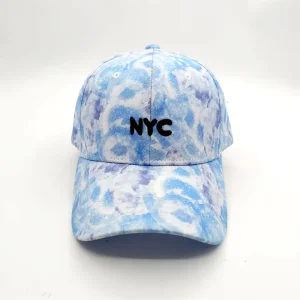
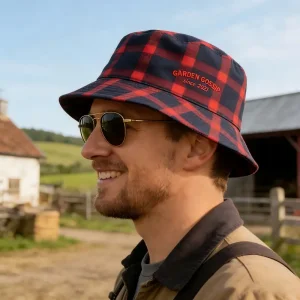
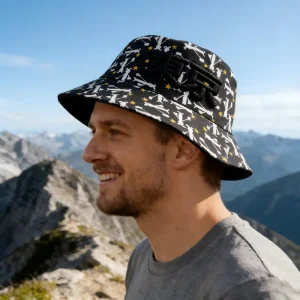
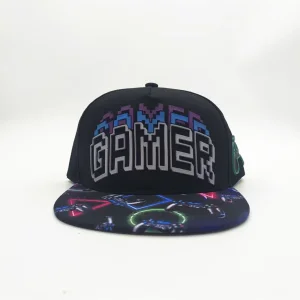
For custom embroidered baseball caps, trucker hats, and bucket hats, our standard production MOQ is 100 pieces per style and colorway. For fully custom knitted beanies featuring bespoke jacquard patterns, woven labels, or silicone badges, our starting MOQ is 200 pieces. We gladly accommodate multi-color splits within a single knit silhouette (e.g., 100 black, 100 navy) to help emerging labels and regional distributors test market appetite with minimal inventory exposure.
Digital mockups, knitting stitch maps, and embroidery digitizing files are delivered within 24 to 48 hours. Physical pre-production samples are completed, steam-blocked, and dispatched via express air courier within 5 to 7 working days. Bulk production for orders ranging from 1,000 to 5,000 pieces typically takes 20 to 25 business days across our dedicated five-line manufacturing setup.
For industrial workwear, uniform contracts, and active outdoor use, we recommend our high-tenacity, low-pilling 100% acrylic or 60/40 acrylic-cotton blend. This configuration offers superior colorfastness against UV degradation and industrial washing, resisting abrasion fuzzing up to Grade 4.5. For premium lifestyle DTC collections, we engineer luxurious 30% Merino wool / 70% anti-pill acrylic blends or 100% GRS-certified recycled cashmere-feel polyester yarns.
Yes, we operate an integrated finishing department providing custom high-density woven damask neck and cuff labels, FSC-certified cardboard hangtags with custom eyelets, printed biodegradable polybags, heat-sealed interior care labels, and serialized GS1-compliant EAN/UPC barcode stickers ready for direct retail scanning or 3PL warehouse intake.
Every single production batch undergoes a three-tier quality regime: First-piece confirmation against approved pre-production samples; in-line continuous stitch inspection during knitting and panel seaming; and a final random AQL 2.5 protocol audit covering tensile recovery, size tolerance (±0.5 cm), colorfastness under wet crocking, and a dual-probe 0.8mm metal/needle detection check to ensure zero broken needle fragments remain within the knit matrix.
Engineered for volume contract delivery. Patterns, trim dies, and embroidery punch tapes are already cataloged on file for rapid sample reproduction.
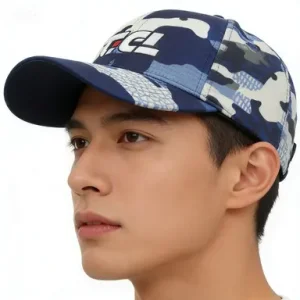
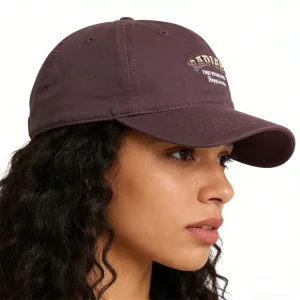
Consult with our technical engineering merchandisers today. Receive detailed yarn composition analyses, digital gauge schematics, and accurate landed FOB/CIF cost estimates within one working business day.
Send Inquiry Now