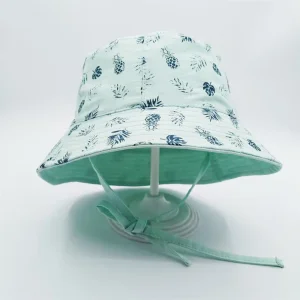
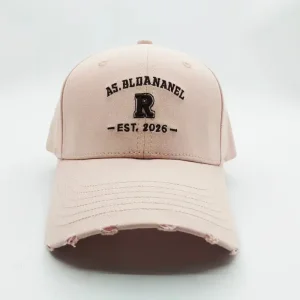
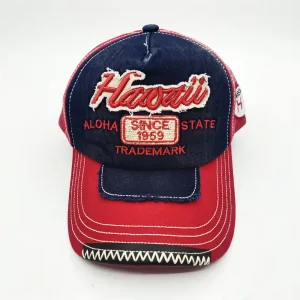
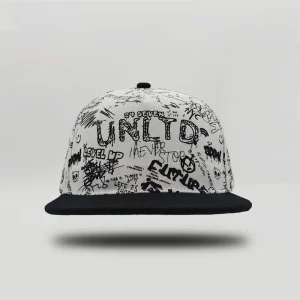
Pre-tested specifications optimized for Mediterranean coastal winters, urban humidity in Grand Tunis, and commercial retail distribution networks across Northern Africa.
Tunisia maintains an illustrious pedigree as a strategic manufacturing outpost for Mediterranean apparel. Within the greater Tunis industrial belt—stretching across Ben Arous, Ariana, and the coastal logistics hub of Radès—the textile and clothing sector represents over 30% of national manufacturing exports. However, an empirical examination of the local ecosystem reveals a profound structural dichotomy: while Tunisia excels at contract cut-and-sew garment manufacturing for European fast fashion, specialized winter headwear production remains severely supply-constrained.
In the domestic wholesale districts of Tunis—specifically the historic trade arteries surrounding Souk El Grana, Rue d'Espagne, and modern retail clusters in Les Berges du Lac and Ennasr—importers face a persistent quality and lead-time hurdle. Traditional local textile ateliers in Monastir or Ksar Hellal are overwhelmingly calibrated for woven denim, flat cotton trousers, and intimate apparel. They lack the dedicated infrastructure required for structured winter headwear: automated circular jacquard knitting machinery for heavy beanies, steam-blocking molds for structured crowns, reinforced buckram lamination, and precision multi-head 3D embroidery machines designed specifically for curved visor panels.
Consequently, high-volume distributors in Tunis, commercial corporate outfitters, and emerging private-label labels are forced to choose between low-grade informal imports or exorbitant European finished goods. By forming direct B2B supply corridors with specialized OEM/ODM powerhouses like Qingdao Chenyou Hat Industry Co., Ltd., Tunisian enterprises gain direct access to deep industrial scale: 5 fully optimized sewing lines, specialized ultrasonic cutting, and automated blocking technologies that bridge the domestic engineering deficit.
The global winter hat market—valued at $6.8 billion in 2024 and expanding at a compound annual growth rate (CAGR) of 4.8%—is undergoing its most disruptive supply-chain recalibration in two decades. Brands are no longer evaluating factories solely on FOB unit costs; they are auditing vertical raw material integration, energy footprint, and agile lead times.
Global yarn indexes for Australian Merino wool, cashmilon, and high-bulk virgin acrylic have fluctuated by over 28% over the past 36 months. Large-scale vertically integrated manufacturers in Ligezhuang, China, counteract these fluctuations through multi-ton raw polymer hedging and centralized spinning contracts, insulating Tunis B2B buyers from unpredictable wholesale price surges.
Tunis operates as a primary nearshore export funnel into France, Italy, and Spain. Consequently, products routed through Tunis must strictly adhere to the EU Corporate Sustainability Due Diligence Directive (CSDDD). This requires certified GRS (Global Recycled Standard) RPET, OEKO-TEX Standard 100 Class I/II textiles, and microplastic-mitigated finishing agents.
While European retailers seek rapid replenishment from Mediterranean hubs, Tunisian manufacturers often lack raw technical materials. The winning hybrid model pairs specialized component fabrication in China (die-cut felt patches, high-tolerance curved brims, technical thermal fleeces) with consolidated logistics direct to Port of Radès.
Designing winter headwear for the Tunisian and wider Maghreb markets is not a one-size-fits-all endeavor. The territory spans Mediterranean coastal humidity, sub-alpine mountain snowfall, and arid desert plateaus with massive diurnal thermal swings.
| Target Region & Climate | Predominant End-Use Channel | Engineered Silhouette | Material Composition & GSM | Key Performance Attribute |
|---|---|---|---|---|
| Northern Coastline Tunis, Bizerte, La Goulette (Damp Cold, 6°C–14°C) |
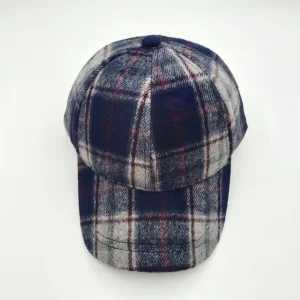
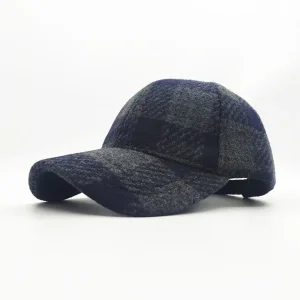
Urban commuting, premium sportswear, college retail | Unstructured Dad Hat & Plaid Tweed Caps | Heavy brushed cotton twill (320 GSM) or Tweed Wool (400 GSM) | Moisture-wicking interior band with wind-resistant shell |
| Kroumirie Highlands Ain Draham, Tabarka (Sub-Alpine Snow, -2°C–8°C) |
Winter tourism, forestry workwear, outdoor recreation | Double-cuff jacquard beanies & fleece-lined earflap caps | 100% High-bulk acrylic + 180 GSM micro-polar fleece lining | Thermal insulation index >0.65 Clo, high elastic memory |
| Central Sahel Belt Sousse, Monastir, Mahdia (Windy Maritime, 8°C–16°C) |
Resort staff, corporate branding, maritime logistics | Structured 6-Panel Wool Caps with 3D embroidery | 60/40 Wool-synthetic blend with poly-mesh support | Salt-spray resistant eyelets and anti-fade reactive dyes |
| Southern Pre-Sahara Tozeur, Douz, Tataouine (Diurnal Drop, 2°C–22°C) |
Desert safaris, transit drivers, agricultural workers | Dual-face thermal bucket hats & tactical 5-panel caps | Ripstop nylon outer shell with detachable thermal neck flap | High UV block (UPF 50+) combined with windproof fleece |

Headwear engineering is shifting from basic cut-and-sew operations into advanced materials science, computer-vision embroidery, and automated whole-garment 3D knitting. Below is the technical deployment schedule implemented across Chenyou's production lines.
Laser CAD fabric cutting with nesting software minimizes textile wastage below 3.5%. Automated vision-guided embroidery aligns intricate logos down to ±0.2mm tolerance.
Integration of Phase Change Material (PCM) microcapsules within winter cap sweatbands to absorb excess heat during activity and release it when ambient temperatures plummet.
Embedding woven UHF RFID chips into interior label ribbons to provide Tunis importers with frictionless customs verification, anti-counterfeit protection, and inventory automation.
Direct yarn-to-finished-beanie automated production lines eliminating seam allowances, friction points, and post-consumer textile offcuts entirely.
Tunisian headwear distributors face three perennial bottlenecks: excessive Minimum Order Quantities (MOQs) from European trading intermediaries, high freight overheads on low-density cartons, and inconsistent dimensional stability on wool caps. Qingdao Chenyou resolves these pain points through industrial synergy.
We reduce entry barriers for Tunis startups and independent labels by offering an agile MOQ of 100 pieces per style/colorway on baseball caps and 200 pieces on custom beanies. Importers can combine up to 3 colorways within a single structural block.
Shipping headwear overseas often entails paying for "air." Our proprietary packing protocol uses inner form retainers and controlled vacuum pre-blocking, increasing carton unit density by 42% without creasing brims or deforming crowns upon arrival in Tunis.
Every single batch undergoes four in-line checkpoints: fabric tensile and colorfastness testing, embroidery stitch-density audits, dimensional brim calibration (tolerance within ±0.5cm), and mandatory dual-head needle detection for consumer safety.
Clear, definitive operational specifications covering lead times, customs documentation, tariff codes, and testing requirements for North African trade.
Ocean freight from Qingdao Port to the Port of Radès (via Mediterranean transshipment hubs in Valencia, Marsaxlokk, or Gioia Tauro) typically requires 28 to 35 calendar days. For seasonal retail campaigns or urgent corporate orders, we coordinate expedited air freight to Tunis-Carthage International Airport (TUN) with door-to-door transit times of 5 to 7 business days, including full export documentation and palletized handling.
Finished headwear is classified under HS Code 6505.00 (Hats and other headgear, knitted or crocheted, or made up from lace, felt or other textile fabric). For wool-blend caps, HS Code 6505.90 is standard. Qingdao Chenyou provides authenticated Commercial Invoices, Packing Lists with volumetric breakdowns, Clean Bills of Lading, and Certificate of Origin (COO) documentation to ensure swift customs clearance with the Tunisian General Directorate of Customs (Direction Générale des Douanes).
We incorporate three specific engineering protocols for sea transit: first, our wool-tweed fabrics undergo pre-shrunk steam treatment prior to cutting. Second, the interior front buckram utilizes double-laminated, thermo-fixed polyester scrim rather than water-soluble starch paper. Third, individual master cartons are lined with 50-micron poly moisture-barrier bags and industrial silica gel desiccants to resist container rain during the voyage.
Yes. Over 60% of our Mediterranean client base requires bilingual or trilingual branding. Our in-house label printing department produces satin printed care labels, damask woven neck tags, and die-cut FSC-certified hangtags incorporating French and Arabic text compliant with Tunisian Ministry of Trade consumer labeling statutes.
Upon receipt of your tech pack or reference vector artwork (AI/PDF), our digital embroidery department generates production digitizing tapes in 24–48 hours. Physical pre-production samples are assembled on our dedicated prototyping line and dispatched via DHL/FedEx within 5–7 working days, allowing your team to physically evaluate crown curvature, fit circumference, and fabric hand-feel prior to bulk sign-off.
We provide full third-party test reports via SGS, Intertek, or TÜV Rheinland upon request. Tests cover colorfastness to artificial light (ISO 105-B02), rubbing fastness (ISO 105-X12), formaldehyde content, and compliance with REACH Annex XVII regulations on AZO colorants and heavy metals.
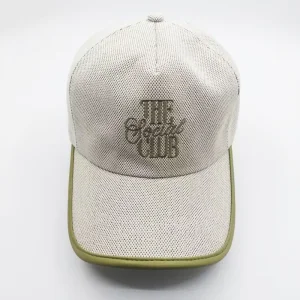
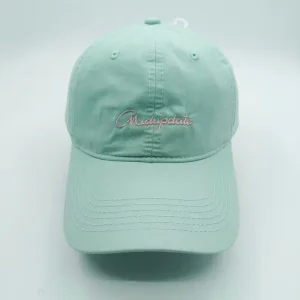
Expand your brand's seasonal collection with verified constructions spanning washed twill, high-density cotton, and urban winter streetwear silhouettes.
Whether you are outfitting a retail franchise in Grand Tunis, tendering for a national institutional uniform contract, or launching a Mediterranean streetwear label, Qingdao Chenyou delivers direct-from-floor precision, competitive landed margins, and certified compliance.